


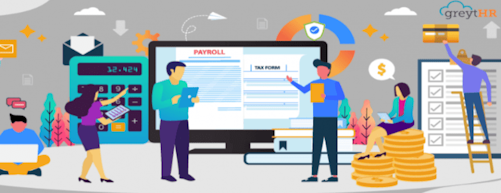
HR technology can reduce repetitive administrative work by connecting employee data, payroll, leave, attendance, workflows, and self-service in one system. Modern HRMS platforms also bring automation and AI into everyday HR workflows, helping teams spend less time on routine processing and more time on employee experience, workforce decisions, and strategic work.
Quick Summary
- HR technology can automate routine HR and payroll workflows while keeping employee data connected.
- A cloud-based HRMS can link onboarding, leave, attendance, payroll, reports, and employee self-service.
- AI in HRMS can support recruitment, employee queries, analytics, and workflow automation when used with appropriate human oversight.
- Employee self-service portals reduce dependence on HR for routine requests and information access.
- For Middle East businesses, HR technology should also support relevant local payroll and compliance workflows.
Why Do HR Teams Need an HRMS and Payroll System?
HR teams balance employee engagement with the operational work that keeps the organisation running. Technology can help reduce the administrative load so HR professionals have more time for employee support, workforce planning, and other higher-value priorities.
Another aspect of HR is of administrative duties, documentation, benefits management and record retention. This is where the real stress is. Timely payments, statutory compliances, issuance of letters, audits and inspection, employee data updation, reporting & MIS, accounting, etc are all a part of the tasks that need to be managed accurately & on a timely basis.
How Is Technology Used in HR?
HR technology connects people, data, and workflows so routine tasks do not have to be managed separately. Cloud-based HRMS platforms can automate approvals, move verified data between modules, provide employee self-service, and surface reports or alerts. AI in HRMS can add another layer by assisting with selected recruitment, query, analytics, and workflow tasks.
Global Industry Trends, Share, Size, Growth, Opportunity and Forecast 2020-2025
Consider an organisation hiring employees for a new project. The talent acquisition team can publish job descriptions through a recruitment system, receive applications digitally, and use AI-assisted recruitment tools to help screen or organise candidate information. Recruiters and hiring managers can then review candidates, schedule interviews, and apply approved compensation structures through defined workflows.

Once a candidate is hired, an onboarding portal can collect approved personal, statutory, and banking information and pass relevant employee and compensation data into connected HR and payroll workflows. Leave and attendance policies can be assigned based on the employee's joining date and eligibility. AI HRMS software may assist with workflow routing or information retrieval, while compensation, benefits, and employment decisions should continue to follow company policy and applicable local requirements.
Employee self-service portals allow employees to submit reimbursement or allowance claims, access payslips, review leave and attendance information, update permitted personal details, and raise HR or payroll queries. This gives employees direct access to routine HR services while reducing repetitive follow-up for HR and payroll teams.
HR management software can support compliance by applying configured rules, maintaining records, generating reports, and integrating with approved internal or external systems where supported. In Middle East payroll, this can include country-specific workflows such as WPS file preparation in applicable markets. Reports and MIS can also be scheduled and shared with authorised users for review and action.
In a Nutshell
Many recurring HR tasks can be automated or routed through a full-suite HRMS, including payroll inputs, leave, attendance, expense claims, employee self-service, workflows, and reporting. The value is not automation for its own sake, but reducing repetitive work, improving data consistency, and giving HR teams more capacity for strategic work.
How Can greytHR Help HR Teams Work More Efficiently?
greytHR is a full-suite HRMS for Middle East businesses, bringing payroll, leave, attendance, employee self-service, expense, performance, recruitment, and core HR workflows onto one platform. Its AI-powered capabilities bring AI into selected HRMS workflows while connected modules reduce duplicate data entry and repetitive administration.
Explore greytHR's HR and payroll software for the Middle East or request a demo to see how the platform fits your HR workflows.
About greytHR
greytHR is a full-suite HR and payroll software trusted by 34,000+ businesses and 3.5 million users across 30+ countries. Carrying a 3-decade legacy, greytHR helps bring the entire employee lifecycle - from onboarding attendance and payroll to compliance, performance, and exit - onto a single system. With AI-powered capabilities, Arabic mobile app and in-house customer support, greytHR helps modern HR teams move away from administrative work into strategic work. Tailored for the Middle East market, greytHR is WPS-compliant, DEWS-adherent, GOSI-regulated.
Frequently Asked Questions
What is HR technology?
HR technology is software used to manage or automate HR processes such as employee data, recruitment, onboarding, leave, attendance, payroll, performance, reporting, and employee self-service. A full-suite HRMS connects several of these functions so data and workflows can move through one system.
Where does AI add practical value in HR workflows?
AI can assist with selected HR tasks such as organising recruitment information, answering routine employee questions, identifying patterns in HR data, and supporting workflow automation. The strongest use cases reduce repetitive work while keeping people appropriately involved in employment, compensation, and other consequential decisions.
How does an employee self-service portal improve HR efficiency?
An employee self-service portal lets employees access payslips, leave balances, attendance information, claims, and routine HR services directly. This reduces repetitive queries and manual follow-up while giving employees faster access to their own information.
What should Middle East businesses look for in an HRMS?
Businesses should evaluate payroll and local compliance depth, leave and attendance, employee self-service, reporting, integrations, mobile access, security, implementation support, and scalability. AI features should be assessed for practical value, governance, and how well they work within existing HR workflows.
Author(s)
Vinod Gulvady
Vinod Gulvady, the author of greytHR, prioritizes work and likes to plan and organize it accordingly.Share this


