


Quick Summary
- Employee self-service portals give employees direct access to routine HR information and actions.
- ESS can reduce repetitive HR queries and administrative follow-ups for employees and managers.
- Common self-service tasks include leave, attendance, expenses, payslips, tax statements and HR documents.
- Role-based access and secure cloud practices are important when employee data is handled through ESS.
- Mobile self-service makes everyday HR tasks easier to complete without relying on a desktop.
McKinsey research found that interaction workers spent about 19% of their workweek, or 8.8 hours, searching for and gathering information. An employee self-service portal can reduce avoidable information hunting by giving employees direct access to routine HR information and actions.
When employees spend hours searching for and gathering information, that time is taken away from more important work. Employee self-service (ESS) portals can reduce manual information handling by giving employees direct access to routine HR tasks, records and requests.
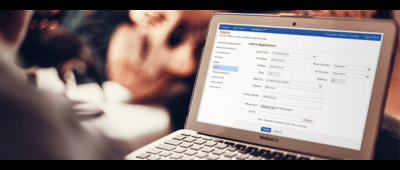
An employee self-service portal is a core part of modern HRMS software, giving employees secure, role-based access to routine HR and payroll information without routing every request through HR. Depending on the HRMS, employees can update permitted personal details, apply for leave, track attendance, submit expenses, access payslips and tax statements, download HR letters and documents, and contact HR support from web or mobile.
As enumerated above, ESS portals have several benefits. Let’s discuss some of these benefits in detail.
Improved efficiency of administrative tasks
ESS portals can be used by employees for recording or tracking attendance, requesting time off, submitting expenses and accessing routine HR information on a single platform. They no longer need to send emails to different people for every leave request or document. HR teams also spend less time chasing employees for routine inputs and answering repetitive queries, freeing up more time for higher-value work.
Transparency of information
At any point in time, employees can refer to the information made available to them through the ESS portal. Depending on the HRMS, this can include company policies, salary-related documents, leave balances, attendance records, payslips, tax statements and HR letters. This reduces the need to track old email threads or approach HR for information that is already available through self-service.
Updated employee information
Have you ever tried calling an employee in case of an emergency leave, only to figure out that the number is out of service?
If this has happened to you before, you know why employee information needs to stay current. HR teams may not always have the bandwidth to chase every change manually. Employee self-service portals can allow employees to review and update permitted personal information, subject to the organisation’s access controls and approval workflows, helping HR maintain more current employee records.
Greater employee autonomy and convenience
Self-service gives employees more control over everyday HR tasks. Instead of waiting for HR to share a payslip, confirm a leave balance or provide a routine document, employees can access available information and complete permitted actions themselves. Mobile access can make this even more convenient for employees who are away from a desk or work across locations.
Enhanced data security
Paper records can be misplaced, damaged or accessed by people who should not see them. A cloud-based HRMS with employee self-service can centralise employee data and apply controls such as role-based access and permissions. Security still depends on the platform and the organisation’s practices, so businesses should evaluate access controls, certifications, authentication and data-governance measures when choosing an HRMS.
Reduced environmental footprint
Reducing unnecessary paperwork can also support a more digital workplace. A cloud-based HRMS with employee self-service can move routine records, requests, approvals and documents away from physical files and printed forms. While ESS is only one part of a broader paper-reduction effort, it can reduce dependence on manual paperwork across everyday HR processes.
Employee self-service has moved beyond the desktop portal
Employee self-service is most useful when it is part of a connected HR management system rather than a standalone information portal. By bringing routine employee actions, HR records, payroll information, leave and attendance, expenses and documents into the same HRMS, organisations can give employees more control while reducing administrative work for HR. greytHR’s full-suite HRMS extends employee self-service across web and mobile, connecting everyday employee and manager actions with the wider HR system. Employees and managers can apply for leave, track attendance, submit expenses, approve requests, access payslips and tax statements, download HR letters and documents, and contact HR support. With 3M+ mobile app downloads, self-service is designed to be part of everyday HR rather than a separate portal employees visit only occasionally.
Frequently Asked Questions
What is an employee self-service portal?
An employee self-service portal is an HRMS interface that allows employees to access permitted HR information and complete routine tasks themselves, such as applying for leave, checking attendance, accessing payslips or tax statements, submitting expenses and downloading HR documents.
What should employees be able to do through ESS?
The exact features depend on the HRMS. Common capabilities include leave and attendance actions, expense submissions, access to payslips and tax statements, personal-information updates, HR documents, approvals and support requests.
How does employee self-service reduce HR workload?
ESS shifts repetitive transactions and information requests to self-service. When employees can retrieve routine information and complete standard actions themselves, HR teams spend less time on manual follow-ups, document sharing and recurring queries.
Is employee self-service the same as an HRMS?
No. Employee self-service is typically one part of an HRMS. A full-suite HRMS can connect ESS with core HR, payroll, leave and attendance, expenses, performance, recruitment and other employee-lifecycle workflows.
What should you look for in an employee self-service portal?
Look beyond basic profile access. A useful ESS experience should support the routine actions employees and managers actually need, such as leave and attendance, payroll documents, expenses, approvals, HR letters and support. Mobile access, role-based permissions and integration with the wider HRMS are also important considerations.
About greytHR
greytHR is a full-suite HRMS trusted by 34,000+ organisations and 3.5 million+ employees across 30+ countries. This cloud-based platform helps businesses manage the complete employee lifecycle, including manpower planning, recruitment and onboarding, core HR, leave and attendance, timesheets, payroll and statutory compliance, performance and expense management, and exit. With built-in Agentic AI working across every module, HR teams can surface insights instantly and make data-driven decisions. greytHR is widely recognised for its dedicated in-house support team and strong Indian and GCC statutory payroll compliance.
Author(s)
Guest
Guest Blogging is a Win-Win situation for both the blog owners and guest bloggers. greytHR publishes high-quality content on the blog.Share this